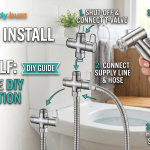
A handheld bidet sprayer is a small shower-head-style nozzle that mounts beside your toilet and connects to your existing water line, giving you a hose-and-lever spray you can aim yourself. It’s the most flexible category of bidet on the market — more adjustable than a fixed bidet seat, and far more powerful than a squeeze bottle. If you’ve been comparing options, the Arofa Handheld Toilet Bidet Sprayer is one of the most consistently recommended picks for 2026, and this guide breaks down exactly why, what’s in the box, and how it stacks up.
Disclosure: This post contains an affiliate link. If you buy through it, we may earn a small commission at no extra cost to you.
Why a Handheld Sprayer Instead of a Seat or Attachment?
Bidet attachments and electric seats are both great, but they only spray one way, at a fixed angle, from a fixed position. A handheld sprayer puts the nozzle in your hand instead of under the seat, which means:
- You control exact aim, not just pressure
- One device covers bathroom hygiene, cloth diapers, and general cleaning
- It mounts in minutes without replacing your toilet seat at all
- It works for the whole household, including postpartum, pregnancy, mobility limitations, and baby care
This flexibility is exactly why handheld sprayers — sometimes called a “muslim shower,” “bidet shattaf,” or “diaper sprayer” — have become one of the fastest-growing bidet categories.
Arofa Handheld Bidet Sprayer: Full Feature Breakdown
The Arofa Handheld Toilet Bidet Sprayer is built around three things: adjustable pressure, durable materials, and a no-plumber install. Here’s what’s actually in the kit and how each part functions.
Adjustable Water Pressure, From Gentle to Jet
The sprayer head has a lever you press with your thumb. Light pressure gives a soft, gentle rinse suited to feminine hygiene, postpartum care, or baby washing; pressing harder increases flow up to a full jet spray strong enough for rinsing cloth diapers or cleaning bathroom floors. Because the control is manual and mechanical (not digital), there’s no learning curve — you feel the pressure change in real time as you press.
304 Stainless Steel Head and Hose, Brass Valve
The sprayer head and hose are made from 304 stainless steel with a brushed nickel finish, and the core control valve is brass. This combination matters for two reasons: stainless steel resists rust and mineral buildup better than plastic-coated metal, and brass valves hold up to repeated on/off pressure cycling far longer than plastic ones. For a bathroom fixture that’s touched daily and sits in a humid environment, that build quality is the difference between a sprayer that lasts a year and one that lasts five.
Two Ways to Install: Onto-Toilet or Wall Mount
Most handheld sprayers only support one mounting method. The Arofa kit supports both:
- Onto-toilet mounting — the sprayer hook attaches directly to the toilet tank, so there’s nothing to drill and no wall hardware needed.
- Wall mounting — for bathrooms where you’d rather keep the sprayer off the toilet tank entirely, or where you want it positioned closer to a shower or utility area.
What’s in the Box
- Handheld sprayer head with pressure-control lever
- 7/8″ brass T-valve
- Stainless steel braided hose
- Mounting hook/holder
- Spare rubber washers and long screws for wall mounting
Because the T-valve is a standard 7/8″ fit, it connects to the same water line already feeding your toilet tank — no new plumbing, no cutting into a wall, no shutoff beyond your existing valve.
How to Install It (No Plumber Needed)
- Turn off the water supply at the valve behind your toilet, then flush to drain the tank.
- Disconnect the toilet’s existing supply line from the base of the tank. Keep a towel handy for residual water.
- Install the T-valve onto the tank’s water inlet, then reconnect the original supply line to the bottom of the T-valve. Hand-tighten first, then snug with a wrench — don’t overtighten.
- Connect the bidet hose to the side outlet of the T-valve and to the sprayer head.
- Mount the holder either on the toilet tank or the wall, using the included screws and washers.
- Turn the water back on slowly and test the spray at low pressure before using it normally.
Most people finish this in under 20 minutes with nothing more than an adjustable wrench.
Who This Sprayer Is Actually Good For
- Feminine hygiene and postpartum care — the gentle end of the pressure range is designed for sensitive use, including during pregnancy and menstrual cycles.
- Cloth diapering parents — the jet setting is strong enough to rinse solids off cloth diapers directly over the toilet, a common reason people search for a “diaper sprayer.”
- Anyone with limited mobility — arthritis, recovery from surgery, or postpartum recovery can all make traditional wiping harder; a handheld sprayer with an ergonomic one-hand grip reduces the physical effort needed.
- Multi-use households — the same sprayer doubles as a pet-washing hose, a floor or shower rinse, and a general utility sprayer, so it earns its spot even for people who weren’t specifically bidet-shopping.
- Renters — because installation doesn’t touch the toilet seat or require drilling, it’s fully removable if you move.
Handheld Sprayer vs. Bidet Seat vs. Bidet Attachment
| Feature | Handheld Sprayer | Bidet Attachment | Bidet Seat (Electric) |
|---|---|---|---|
| Aim control | Full manual aim | Fixed nozzle angle | Fixed nozzle angle |
| Install time | ~15–20 min | ~15–30 min | ~30–45 min |
| Multi-purpose use | Yes (diapers, pets, floors) | No | No |
| Power needed | No | No | Usually yes |
| Warm water | No (unless hot/cold model) | Some models | Common |
| Best for | Hands-on control, multi-use homes | Simplicity, lowest cost | Comfort features |
If your priority is precise control and versatility rather than hands-free convenience, the handheld format wins. If you want warm water and zero manual aiming, an electric seat is worth the higher price — see our Electric vs Non-Electric Bidets guide for that comparison.
Maintenance Tips
- Wipe the sprayer head and hose weekly with a damp cloth; a monthly vinegar soak clears mineral buildup in hard-water areas.
- Close the T-valve after each use if you want an extra layer of leak protection, especially the first few weeks after install.
- Check the washers every few months — they’re the most common source of a slow drip if a connection loosens over time.
FAQs
Is a handheld bidet sprayer sanitary?
Yes. Water-based rinsing removes residue more completely than dry wiping, and the sprayer head only contacts water, not skin directly, reducing cross-contamination risk when used correctly.
Can I install this without a plumber?
Yes. The kit is designed for DIY installation using the included T-valve, hose, and mounting hardware — most people complete it in 15–20 minutes with just a wrench.
Does it work for cloth diapers?
Yes. The jet-spray setting is specifically strong enough to rinse solid waste off cloth diapers directly over the toilet before laundering.
Will it fit my toilet?
The T-valve is a standard 7/8″ fit designed to work with most toilet tanks that have a standard water inlet connection. If you’re unsure, check your tank’s existing supply line connector size before buying.
Does it need electricity?
No. It runs entirely on your home’s existing water pressure — there’s no outlet, battery, or charging required.
Can I control the water temperature?
The standard Arofa handheld sprayer uses your existing cold supply line. If warm water matters to you, Arofa also makes a hot-and-cold mixing valve version built for that purpose.
Bottom Line
The Arofa Handheld Toilet Bidet Sprayer covers the three things that matter most in this category: real pressure control, materials that hold up in a wet bathroom environment long-term, and an install process anyone can do without hiring a plumber. If you want one device that handles feminine hygiene, baby cloth diapers, and general bathroom cleaning without needing power or a full seat replacement, it’s one of the strongest handheld options available right now.